Care summary
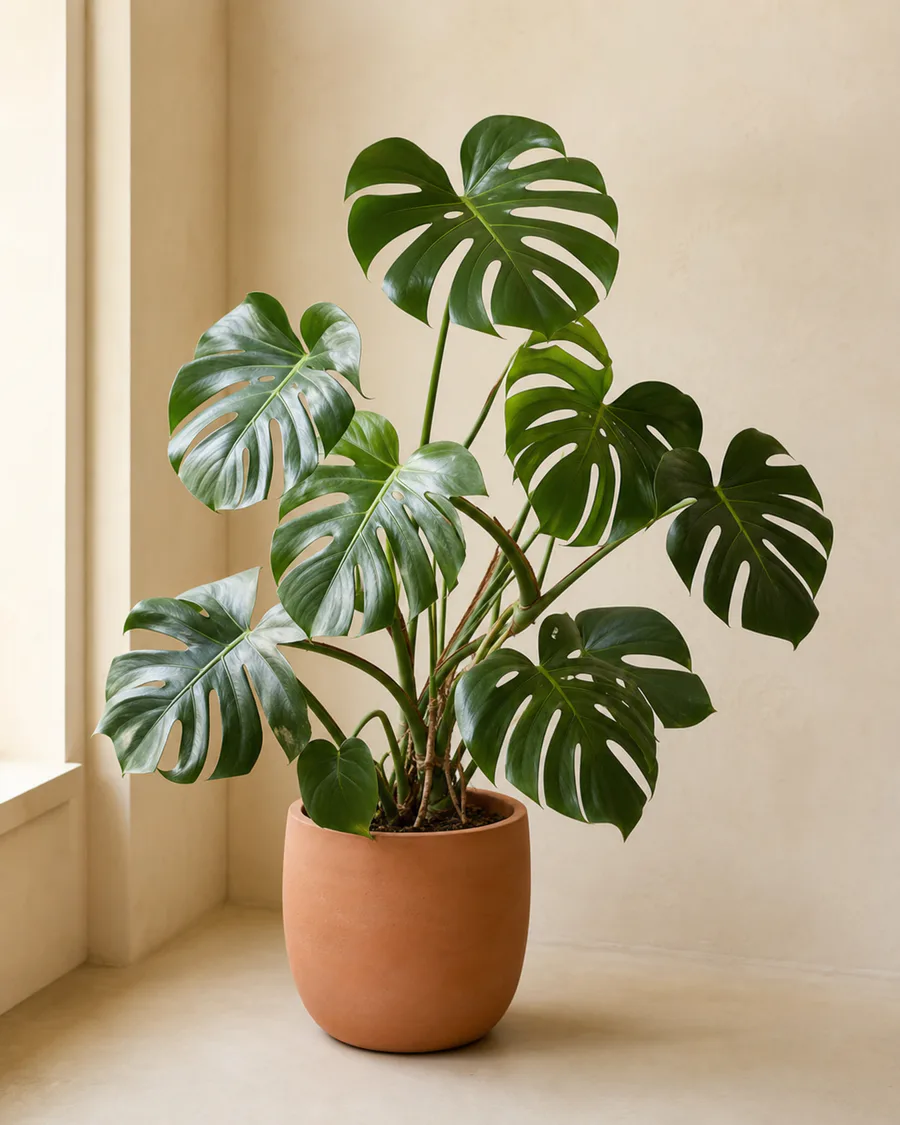
A bold climbing plant with large, naturally split leaves. The details below are a starting point; use the condition of the soil, leaves, and roots to adjust care in your home.
Light
Choose bright, indirect light. Gentle morning sun can be suitable, but harsh midday sun may scorch leaves. Growth may slow and leaf splits may be limited in a dim position.
Watering
Water thoroughly when the upper few centimetres of mix feel dry, then let excess water drain. Check the soil rather than following a fixed calendar.
Soil
Use a loose indoor mix amended with bark and perlite so that roots receive both moisture and air. Always use a pot with a drainage hole.
Temperature
A stable indoor range around 18–27°C is generally comfortable. Protect the plant from cold windows, radiators, and sudden draughts.
Humidity
Normal household humidity is often adequate, although moderate humidity can help new leaves unfurl cleanly. Air circulation remains important.
Feeding
During active spring and summer growth, apply a balanced houseplant fertiliser at the label’s weakest recommended rate. Pause or reduce feeding when growth slows.
Repotting
Repot when roots densely circle the pot or watering becomes unusually difficult. Move up only one pot size and add a moss pole or sturdy support if needed.
Propagation
Take a stem cutting that includes at least one node. A leaf without a node may remain green but cannot develop into a complete new plant.
Common problems
- Yellowing leaves can follow persistently wet soil or normal aging of an older leaf.
- Brown patches may indicate harsh sun, cold damage, or watering stress.
- Small, unsplit leaves often reflect youth, limited light, or lack of climbing support.
Several causes can create similar symptoms. Review recent changes, soil moisture, light, and root condition before making a major adjustment.