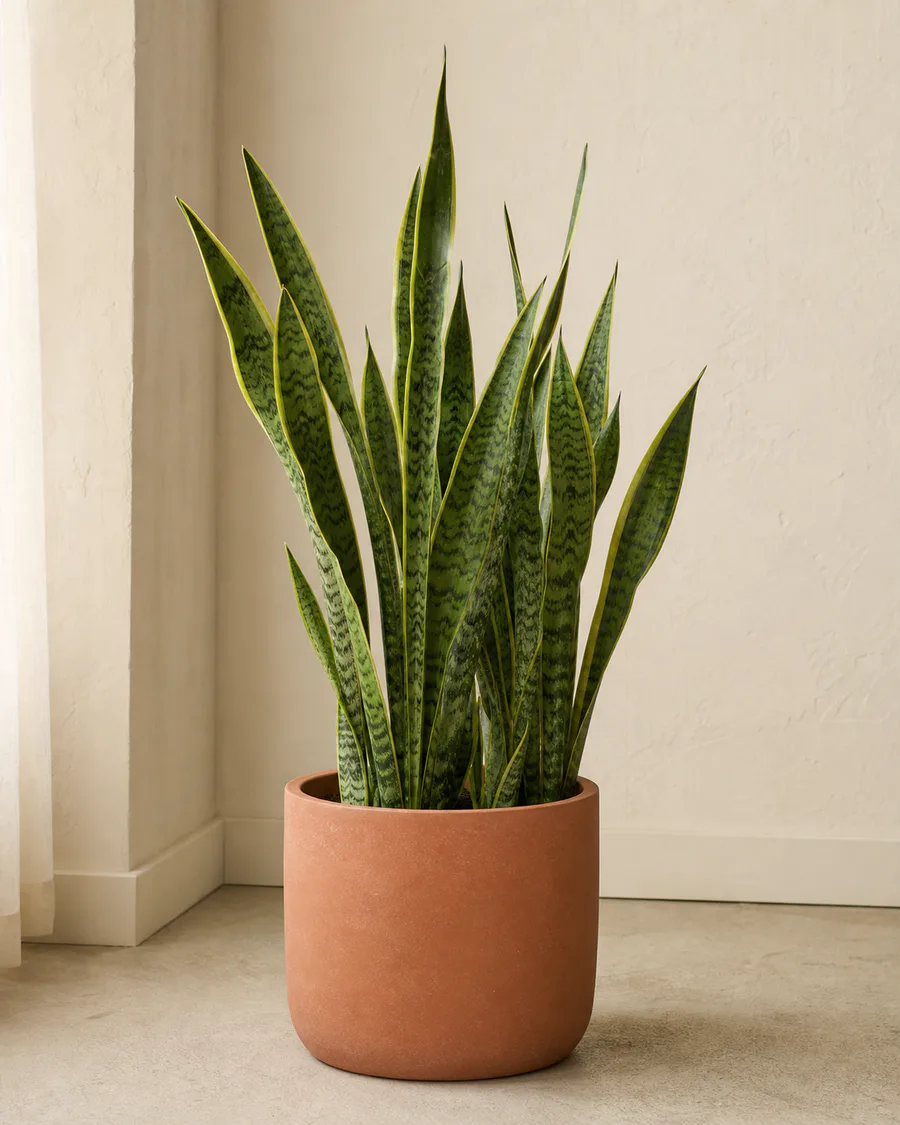
Care summary
Upright, architectural leaves and a forgiving approach to dry soil. The details below are a starting point; use the condition of the soil, leaves, and roots to adjust care in your home.
Light
It can cope with low light, though medium to bright indirect light supports steadier growth and clearer markings. Introduce any direct sun gradually.
Watering
Allow the potting mix to dry thoroughly before watering again. Saturate the mix, drain the pot, and empty the saucer. Long-lasting wetness is a greater risk than brief dryness.
Soil
Use a fast-draining succulent mix or add mineral material such as perlite to indoor potting mix. A drainage hole is essential.
Temperature
Keep it in a stable room, ideally above 15°C. Cold combined with wet soil can quickly damage roots and leaves.
Humidity
Average indoor humidity is suitable. Avoid keeping water in the centre of the leaf rosette, particularly in cool conditions.
Feeding
Feed lightly once or twice during active growth. Excess fertiliser is unnecessary for this naturally slow-growing plant.
Repotting
Repot only when the rhizomes crowd or distort the container. A slightly snug, sturdy pot helps support the tall leaves.
Propagation
Divide established clumps to preserve leaf patterns. Leaf cuttings can root, but variegated cultivars may revert to green.
Common problems
- Soft leaf bases usually point to excess moisture or cold, wet conditions.
- Wrinkled or folding leaves can indicate prolonged dryness or damaged roots.
- Pale growth may result from very low light or abrupt exposure to strong sun.
Several causes can create similar symptoms. Review recent changes, soil moisture, light, and root condition before making a major adjustment.