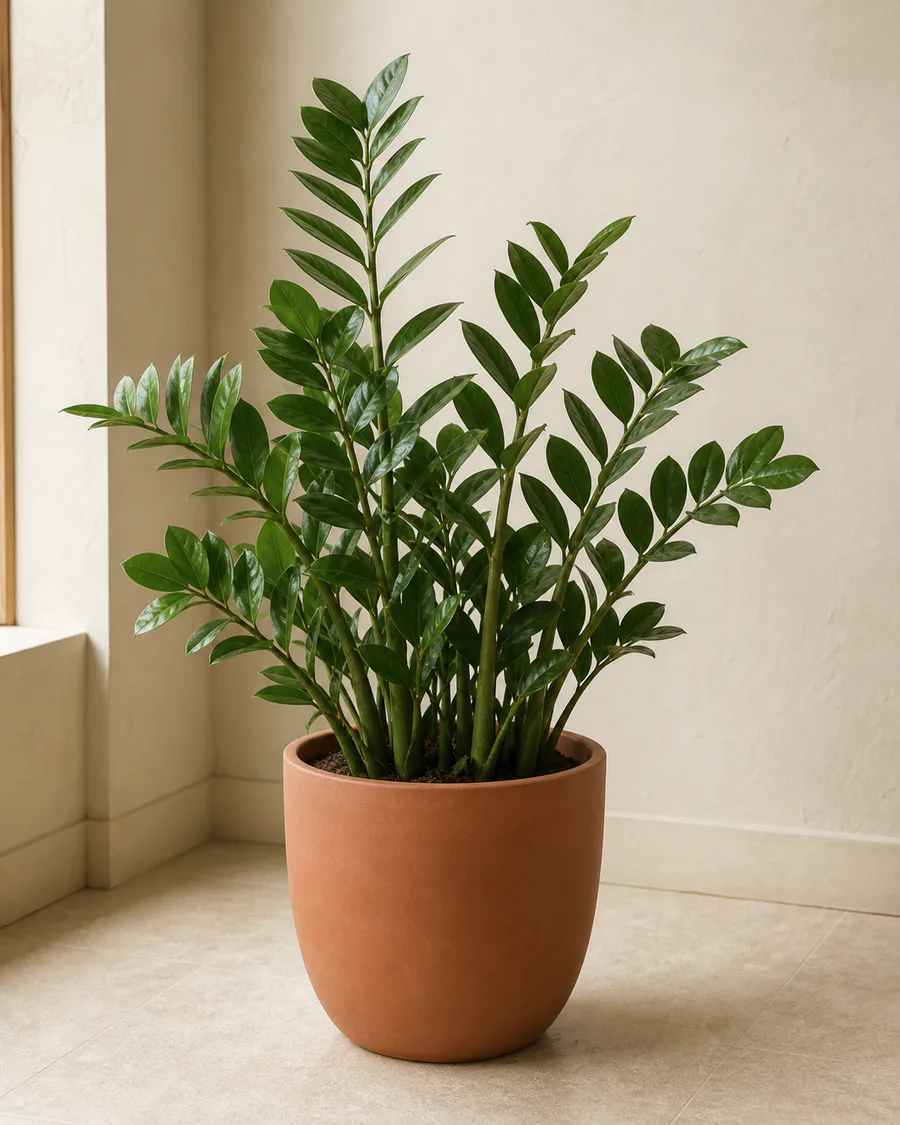
Care summary
Glossy foliage, strong structure, and excellent drought tolerance. The details below are a starting point; use the condition of the soil, leaves, and roots to adjust care in your home.
Light
Low light is tolerated, but medium or bright indirect light produces more reliable new growth. Avoid prolonged harsh sun through hot glass.
Watering
Let most or all of the potting mix dry before watering deeply. The rhizomes store water, so a rigid weekly schedule can easily keep the roots too wet.
Soil
Choose a well-draining mix with added perlite, pumice, or bark. Use a pot with a drainage hole and never leave it standing in water.
Temperature
Typical room temperatures of roughly 18–27°C work well. Keep it away from frost, cold draughts, and direct heat sources.
Humidity
Average household humidity is sufficient. Wipe dusty leaves with a damp cloth rather than applying leaf-shine products.
Feeding
Use a diluted balanced fertiliser a few times during active growth. Do not fertilise dry, stressed, or recently repotted roots.
Repotting
Repot when rhizomes press firmly against the pot or the mix has broken down. Choose a heavy container only slightly wider than the old one.
Propagation
Division is the quickest method. Leaf cuttings also work, but they may take many months to form rhizomes and shoots.
Common problems
- Yellowing stems and soft rhizomes commonly follow persistent excess moisture.
- Leaf drop can occur after severe drought, cold stress, or root damage.
- Little new growth is normal in low light or during cooler months.
Several causes can create similar symptoms. Review recent changes, soil moisture, light, and root condition before making a major adjustment.